
Get Healthy!
- Posted March 2, 2026
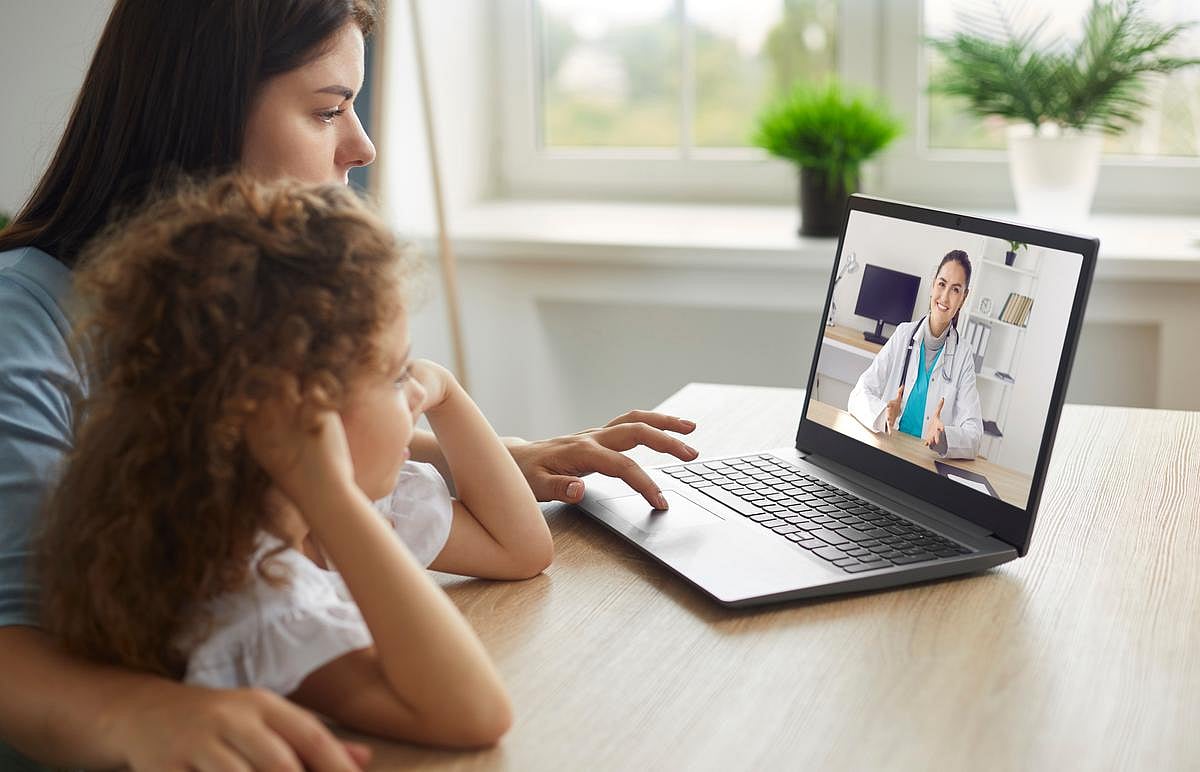
Telemedicine Visits Cost Five Times Less Than In-Clinic Care
Telemedicine appointments aren’t only more convenient, but actually save money for both patients and health care systems, a new study says.
Telemedicine visits are five times less costly than in-person appointments for the most common conditions, researchers recently reported in JAMA Network Open.
On average, telemedicine patients are billed $400 less, researchers found, and are less likely to need follow-up visits after their first appointment.
“Before we did this study, there was a common concern that telemedicine might serve only as an easy source of ‘first aid,’ just delaying in-person care and increasing costs overall,” said co-senior researcher Dr. David Asch, senior vice president for strategic initiatives at the University of Pennsylvania.
“But we found that wasn’t true, and our work suggests that for many patients, telemedicine can be a complete solution, not just a temporary band-aid,” he said in a news release.
During the COVID-19 pandemic, use of telemedicine exploded thanks to emergency regulations that expanded access, researchers said in background notes.
For example, there was a 90-fold increase in telemedicine visits at the University of Pennsylvania health system – a million visits between March 2020 and February 2021, up from only 11,000 in 2019.
However, questions remain regarding telemedicine’s effectiveness and cost-efficiency, researchers said.
“We know that telemedicine is not one-size-fits-all, particularly for mental and behavioral health, where thoughtful triage, follow-up and continuity of care remain important, so we wanted to better understand whether we were truly seeing efficient diversion of care,” senior researcher Yong Chen, a professor of biostatistics at the University of Pennsylvania, said in a news release.
For the study, researchers looked at data for more than 160,000 doctor’s visits, both in-person and telemedicine, across four months in 2024.
They focused on 10 common conditions, including COVID, respiratory symptoms, neurodevelopmental disorders, sleeping problems and anxiety. Cases were tracked from seven days before an initial visit and 30 days afterward, to see whether follow-up visits were needed.
Overall, the average charge associated with telemedicine visits was $96, compared with $509 for in-person appointments.
Telemedicine visits required an average of three follow-up appointments, compared with more than four for in-person visits.
Illnesses like respiratory symptoms were vastly cheaper to treat with telemedicine, costing roughly $800 less on average, researchers said.
On the other hand, mental health care cost about the same for both in-person and telemedicine visits, results showed.
“Many systems already deliver most psychiatric care via telemedicine since care is dominated mostly by counseling and medication management instead of through tests or procedures, like care for other conditions,” said lead researcher Bingyu Zhang, a doctoral student in applied mathematics and computational science at the University of Pennsylvania.
“So, treatment and prescribing workflows may look similar across visit types and make episode charges comparable, even though telemedicine is still associated with fewer subsequent visits,” Zhang said.
Researchers noted that Congressional action is needed to maintain the COVID-era regulations that expanded telemedicine access.
“If telemedicine is allowed to revert to the more limited model that existed before COVID, the cost savings we identified could disappear,” said researcher Kevin Mahoney, CEO of the University of Pennsylvania Health System.
“At a moment when hospitals and health systems face serious financial headwinds, those savings are vital,” Mahoney said in a news release. “They enable us to reinvest in patient care and fuel innovation.”
More information
The U.S. Department of Health and Human Services has more on telemedicine.
SOURCE: University of Pennsylvania, news release, Feb. 25, 2026


